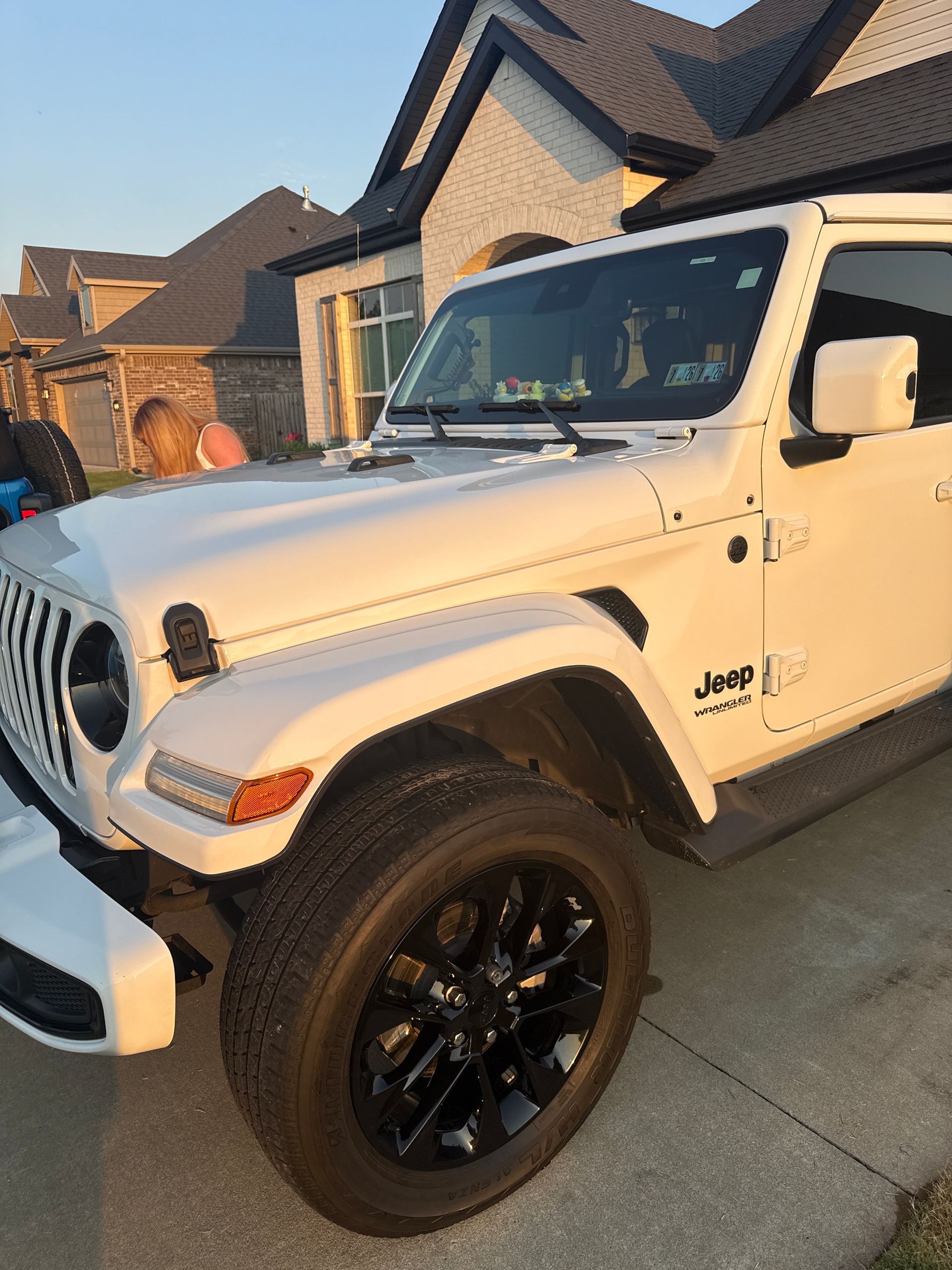

Removing What Regular Washing Leaves Behind
Paint Decontamination in Bentonville for vehicles with rough paint texture, embedded rail dust, and surfaces preparing for protective coatings
Running your hand across the hood after washing and feeling gritty texture signals that contaminants have bonded into the paint beyond what soap and water can remove. Paint decontamination addresses industrial fallout, iron particles from brake dust, and tree sap residue that create rough surfaces and block protective treatments from adhering properly. The process uses clay bar treatment to mechanically lift bonded particles and chemical iron removers that dissolve metallic contamination, restoring the smooth finish that paint had when new. NWA Precision Mobile Detailing performs decontamination work in Bentonville as a standalone service or as preparation before ceramic coating, wax application, or paint enhancement procedures.
Clay bar treatment involves gliding a specialized polymer bar across lubricated paint, where it grabs and pulls embedded particles from the surface without scratching. Iron removers react chemically with metallic contamination, turning purple as they dissolve particles that regular cleaning cannot address.
Schedule a paint assessment to determine contamination levels and whether decontamination should precede other detailing services.
Why Contamination Removal Works for Surface Protection
Decontamination follows a staged approach that addresses different contamination types. Washing removes loose dirt first, then iron remover is sprayed onto panels and allowed to dwell while it reacts with metallic particles. After rinsing, clay bar treatment handles remaining bonded contamination, working panel by panel until the entire surface feels glass-smooth under your palm.
Once decontamination finishes, waxes and sealants bond more completely to the paint because no contamination layer blocks contact. You notice that the paint feels noticeably smoother when touched, light reflects more uniformly across panels without the diffusion that embedded particles cause, and protective products last longer because they adhere to clean paint rather than sitting atop contamination. The surface becomes more receptive to subsequent treatments, whether you plan ceramic coating application or simply want better results from routine waxing.
Decontamination does not correct paint damage like swirl marks or oxidation, but it does prepare the surface for polishing or coating steps that address those issues. Vehicles stored near industrial areas, parked under trees, or driven frequently on highways accumulate contamination faster and benefit from decontamination every six to twelve months depending on exposure levels.
What Property Owners Usually Ask
Paint decontamination raises questions about process safety, frequency, and how it integrates with other detailing procedures.
What does the clay bar process involve?
A flat piece of synthetic clay is kneaded into a pliable disc, then glided across lubricated paint using light pressure. The clay grabs embedded particles as it moves, pulling them from the paint surface. Frequent re-kneading exposes clean clay and prevents removed contamination from scratching the finish.
How often should decontamination be performed?
Frequency depends on environmental exposure and vehicle use. Bentonville vehicles parked outdoors near construction zones or under trees may need decontamination every six months, while garaged vehicles driven less frequently can extend intervals to twelve months or longer.
Why does iron remover turn purple?
The chemical reaction between iron remover and metallic particles produces a purple color change that indicates contamination is dissolving. Heavily contaminated areas show more intense color, which helps identify sections with greater particle concentration.
When should decontamination precede ceramic coating?
Always. Ceramic coatings bond to whatever surface exists at application time, which means any contamination present gets sealed beneath the protective layer. Decontamination ensures the coating adheres to clean paint and achieves maximum bonding strength and longevity.
What contamination sources affect vehicles in Bentonville?
Brake dust from nearby vehicles, industrial fallout from manufacturing activity, pollen and tree sap during spring and summer, and rail dust if the vehicle is transported by train before delivery all contribute to embedded contamination that washing alone cannot remove.
NWA Precision Mobile Detailing performs decontamination as part of comprehensive paint preparation or as a targeted service to restore surface smoothness. Contact us to evaluate your paint condition and recommend appropriate treatment intervals based on how and where the vehicle is used.